Building a Knowledge Base to Inform Special Education Practice
Evidence-Based and High-Leverage Practices
DOI:
https://doi.org/10.33043/4njg35urzxsKeywords:
Evidence Based Practices (EBPs), High Leverage Practices (HLPs), Instruction, Special Education, Teacher PreparationAbstract
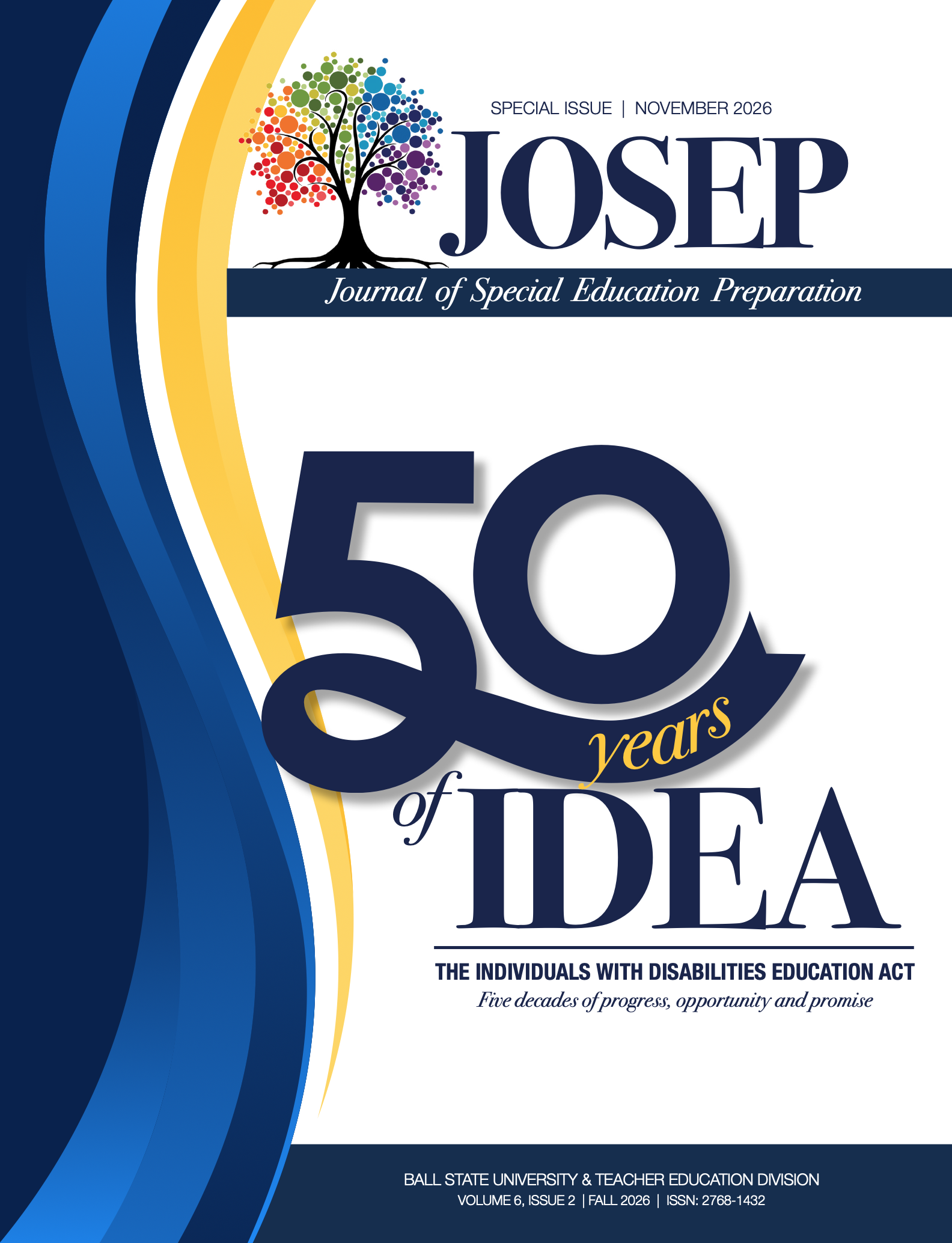
As the field celebrates the 50th anniversary of the Individuals with Disabilities Education Act (IDEA), it is worth recognizing the extraordinary progress made in building a knowledge base to support effective instruction for students with disabilities. This article traces the development of two of the field’s most influential contributions: evidence-based practices (EBPs) and high-leverage practices (HLPs). We describe how special education evolved from a primary focus on establishing access and legal rights to identifying, validating, and disseminating instructional practices that improve student outcomes. EBPs provide research-validated interventions shown to be effective for specific learners and outcomes, while HLPs identify the foundational teaching practices essential across settings and contexts. Together, these complementary frameworks have strengthened teacher preparation, informed instructional decision making, and improved the quality of special education. We conclude by considering how continued refinement of EBPs and HLPs can further advance IDEA’s promise of meaningful educational outcomes for all learners.
Downloads
Published
How to Cite
Issue
Section
License
Copyright (c) 2026 Bryan G. Cook, Michael J. Kennedy

This work is licensed under a Creative Commons Attribution 4.0 International License.